
Your cart is empty!
Let's fix that.
 FREE Shipping on all orders above $65!


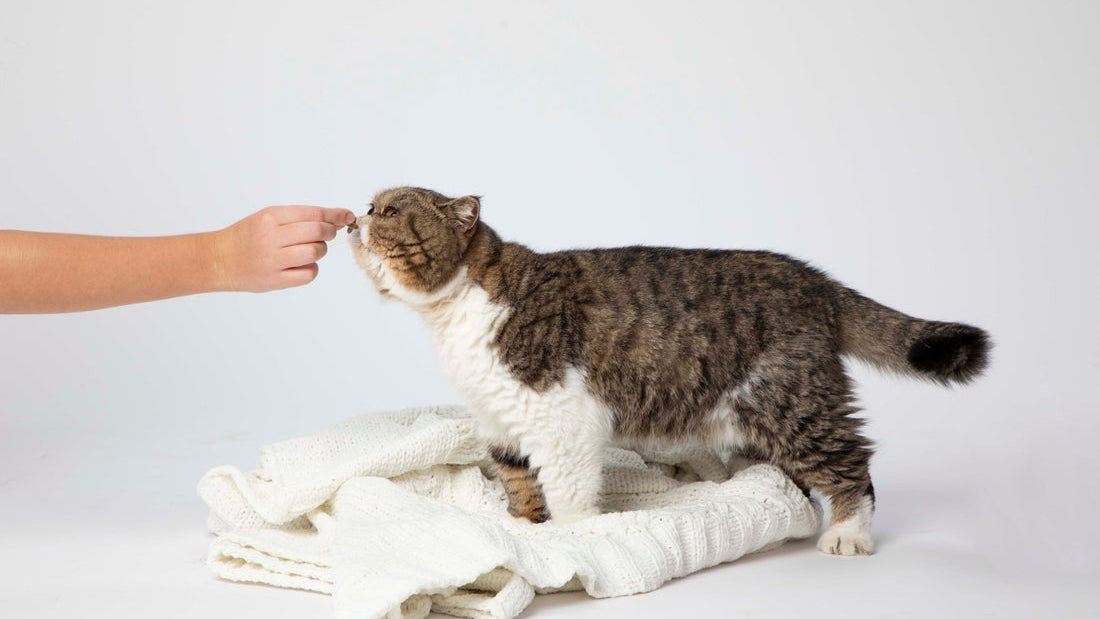
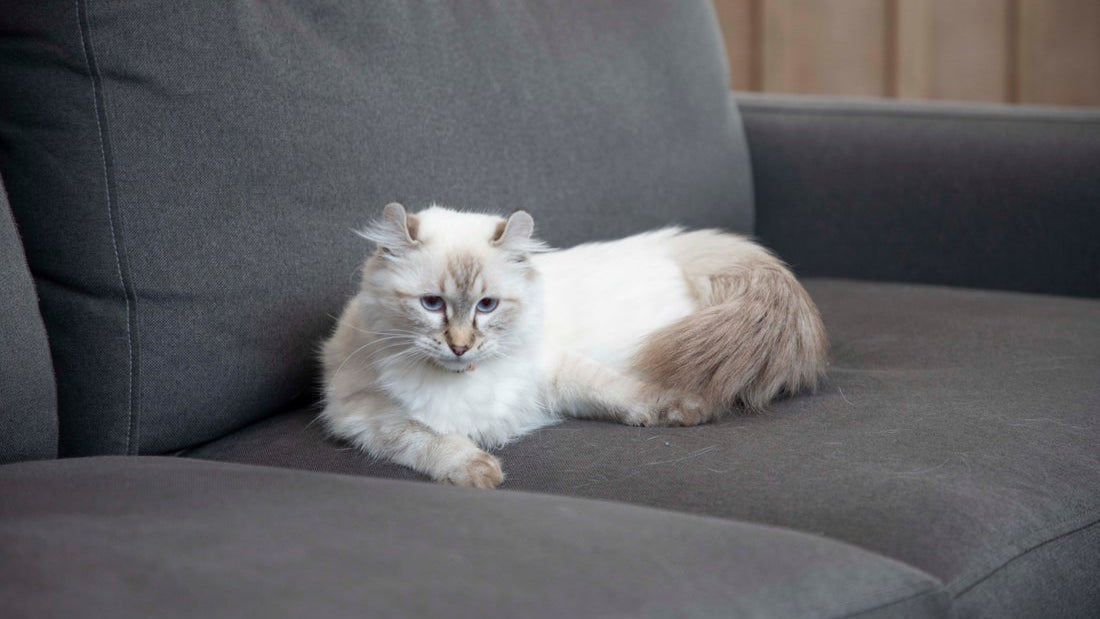
If your indoor cat seems less interested in play or has gradually gained weight, it may be time to take a closer look at their feeding and activity routine.
Indoor cats live safer, longer lives in a lot of ways, but that same safety often comes with less built-in activity than cats who spend time outdoors. Without regular hunting, exploring, or territory to patrol, it's easy for an indoor cat's weight to creep up gradually, often without a pet parent noticing until a vet visit points it out.
Helping an indoor cat reach or maintain a healthy weight involves more than just switching to a bag labeled "weight management." Food, portions, activity, and how weight loss is approached all matter for indoor cat weight management, especially for cats, where the wrong approach can create a serious health risk rather than just a slower result.
Before anything else, it helps to know what you're actually looking at. Common signs your cat may be overweight include:
Loss of a visible waist: When looking down from above, your cat's body looks straight or rounded rather than tapering in behind the ribs.
Difficulty grooming certain spots: A cat who's stopped reaching their lower back or hindquarters may be carrying extra weight that makes it harder.
Reluctance to jump: Furniture or counters they used to climb easily becomes a harder effort, or something they avoid.
A noticeable fat layer: You can see or feel padding over the ribs and spine rather than a thin covering.
It's worth noting that reduced play, difficulty grooming, and reluctance to jump can also have causes beyond weight. Treat new or sudden changes as a reason to check in with your veterinarian, rather than automatic confirmation that your cat has gained weight.
How much should an indoor cat weigh? There's no single answer, since healthy weight varies widely by breed, frame, and build. Rather than chasing a specific number, body condition is a more reliable guide than the scale alone; something we'll walk through in more detail below.

Before changing anything about your cat's diet, it's worth understanding one thing that makes cats different from most other pets when it comes to weight loss: cats cannot safely crash diet. Dropping a cat's calorie intake too quickly, or cutting off food to speed up weight loss, can trigger a serious and potentially life-threatening liver condition called hepatic lipidosis, sometimes within just a few days of inadequate eating.
This makes gradual, veterinarian-guided weight loss essential for cats. If you're planning to help your cat lose weight, loop in your veterinarian before changing anything, both to confirm a safe calorie target and to rule out other causes of weight gain first.
Weight management should never mean cutting corners on nutrition. Check the package for a nutritional adequacy statement from the Association of American Feed Control Officials, or AAFCO. This tells you whether a recipe is complete and balanced for your cat's life stage, which matters just as much in a weight-management formula as in any other food.
Your veterinarian can help you choose a complete and balanced recipe and a portion that supports weight loss while meeting your cat's nutritional needs. This is part of why crash diets and homemade calorie-cutting without veterinary guidance can backfire for cats specifically.
A bag that says "weight management" or "indoor" doesn't automatically mean fewer calories than what your cat is currently eating. When comparing indoor cat food for weight control, look at the calorie content itself, usually listed as kilocalories per cup, rather than relying on the marketing on the front of the bag.
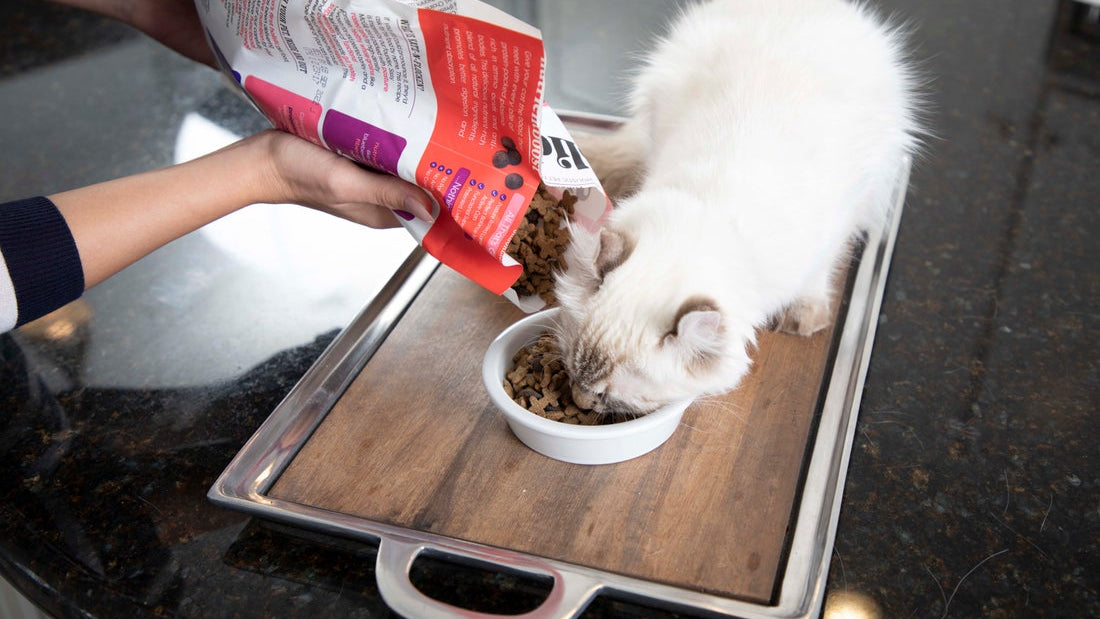
Portion size matters just as much as the recipe itself. Many indoor cats are overfed simply because portions are estimated by eye rather than measured, even when the food itself is appropriate. A standard measuring cup or small kitchen scale can make a real difference in keeping daily intake consistent.
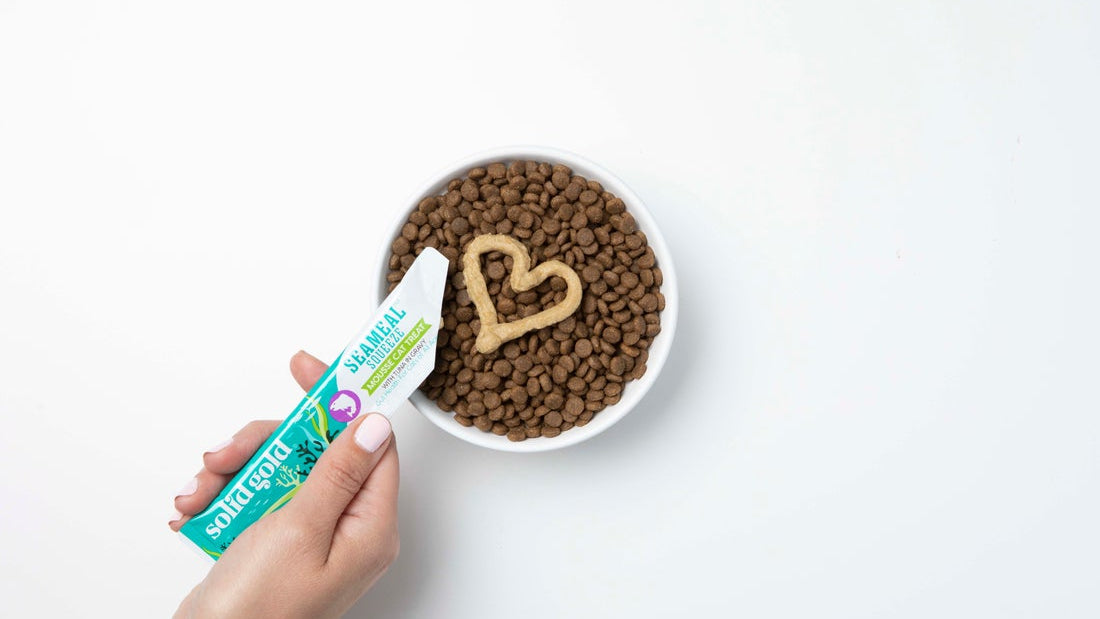
Treats and toppers count too. They're fine as part of a routine, but they need to be factored into your cat's total daily calories, not treated as separate from them.
As obligate carnivores, cats need high-quality protein even while managing their weight, not less of it. A high-protein low-fat cat food recipe should still lead with a named animal protein rather than relying on carbohydrates to make up the difference.
Fat is the most calorie-dense part of a cat's diet, so weight-management recipes typically run lower in fat than standard adult formulas. Fiber adds bulk and may help a cat feel satisfied on fewer calories, though more fiber isn't automatically better for every cat.
The right balance depends on your cat's age, activity level, body condition, and health history. Your veterinarian can help you interpret these numbers for your specific cat, rather than assuming the recipe with the lowest fat or highest fiber is automatically the best fit.
Figuring out what to feed an overweight indoor cat only matters if your cat will actually eat it consistently, and cats are notoriously willing to simply stop eating a food they've decided against, which brings its own risks. When feeding a picky eater, consider the protein source, texture, and your cat's established preferences, not just the numbers on the label. A recipe your cat will actually stay on, rather than one that relies on restriction alone, tends to be the more sustainable path forward.
A gradual transition also matters here. Introducing a new recipe too quickly can lead to a cat refusing it outright, which is counterproductive for weight management and risky in its own right if it leads to a cat eating little or nothing for an extended stretch. We've covered the full process in our guide on how to transition cat food, including a day-by-day schedule for picky eaters specifically.
When you're ready to compare weight management cat food options, our Fit as a Fiddle™ with Alaskan Pollock dry food for adult cats lists Alaskan pollock, turkey meal, and ocean fish meal as its first three ingredients. Its guaranteed analysis lists a minimum of 31% crude protein, a minimum of 9% and a maximum of 12% crude fat, and a maximum of 9% crude fiber, at 3,225 kcal per kilogram.
Peas, tapioca, chickpeas, and pea fiber follow in the ingredient list. The recipe also includes a blend of functional superfoods, such as pumpkin, carrots, blueberries, and cranberries, along with probiotics to support digestion. It's grain- and gluten-free, with no corn, wheat, or soy.
As with any recipe, review the full nutritional profile and feeding directions against your cat's individual needs, and talk with your veterinarian about an appropriate calorie target before starting.
Diet is only one half of healthy weight management for an indoor cat. Since indoor cats don't have the same built-in activity that comes with roaming outdoors, enrichment and play need to fill that gap intentionally.
A few ways to help an indoor cat move more:
Interactive play sessions: Wand toys, laser pointers, or anything that mimics a chase can turn a few minutes a day into real activity.
Food puzzles: Making your cat work a little for their meal or treats slows down eating and adds mental and physical engagement at the same time.
Vertical space: Cat trees, shelves, and window perches encourage climbing and movement throughout the day, not just during a single play session.
Multiple small play sessions: A few short bursts of activity throughout the day tend to work better for cats than one long session, matching their natural activity patterns more closely.
Appropriate portions and activity suited to your cat's abilities can work together to support a healthy weight.
A number on a scale doesn't tell the whole story, especially since healthy weight varies by cat. Body condition scoring gives a more useful picture. Looking down from above, your cat should have a visible waist behind the ribs, rather than a straight or rounded silhouette. Running your hands along their sides, you should be able to feel their ribs under a thin layer of fat, not easily see them, and not have to press firmly to find them either.
Since body condition can be easy to misjudge on your own cat, ask your veterinarian to assess it directly and help set a realistic, safe target weight and timeline.
Healthy weight management for an indoor cat isn't about a single ingredient or a dramatic change. It comes from complete and balanced nutrition, measured portions, regular activity, and a gradual pace that keeps your cat eating consistently throughout.
Explore Solid Gold's weight-management recipe to see if it fits your cat's needs, and work with your veterinarian to set an appropriate calorie target, portion size, and timeline. For cats, a gradual approach helps protect their health while building a routine you can maintain.