Your cart is empty!
Let's fix that.
 FREE Shipping on all orders above $65!


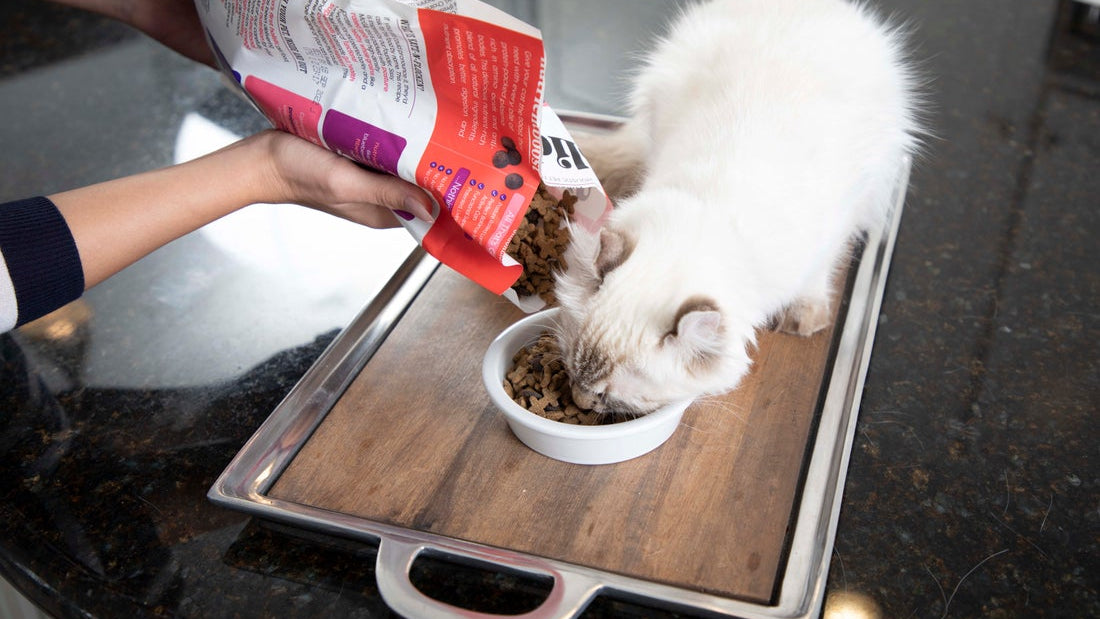
Changing your cat's food may be necessary for many reasons. They may be entering a new life stage, moving to a different protein source, trying another food format, or simply ready for a recipe that better suits their preferences.
Whatever the reason, the contents of the bowl should usually change gradually. Switching cat food too quickly can make it harder for your cat's digestive system to adjust, and it can make an already particular eater even less willing to try something new.
A thoughtful cat food transition gives you time to introduce the new recipe, observe how your cat responds, and adjust the pace along the way, especially when feeding a cat hesitant to try new food.
Your cat's digestive system becomes accustomed to the ingredients and nutritional profile of their regular food. Replacing that food all at once introduces a new combination of protein, fat, fiber, and other nutrients in a single meal.
A gradual transition blends the current and new foods over several days. This gives your cat time to become familiar with the new recipe while allowing you to monitor appetite, digestion, and overall comfort.
Cats can be more particular about changes to their food, and a slower introduction is often what makes the difference for a selective cat. The familiar aroma and texture of the current food remain in the bowl while the new recipe is introduced a little at a time.
If your veterinarian recommends a different schedule for medical or nutritional reasons, follow that individualized guidance instead.
A practical transition schedule may look like this:
Begin with a small amount of the new recipe mixed thoroughly into the current food. A selective cat may be more likely to accept the new recipe when it is fully blended rather than served alongside the old food.
If your cat is eating normally at the first ratio, move to an even mix. Watch appetite and litter box habits during this stage, since changes in stool consistency are one of the clearer signs that the pace needs to slow down.
The new recipe now makes up most of the meal. Continue offering it on the usual schedule, in the usual location, and in the usual bowl.
Some cats complete the transition in about a week. Others, especially picky eaters or cats with sensitive stomachs, may need closer to ten to fourteen days. Let your cat's response set the pace rather than the calendar.
Cats require close monitoring during a food transition because eating too little can lead to serious complications, including hepatic lipidosis. If your cat has eaten little or nothing for close to 24 hours, contact your veterinarian for guidance. Contact them sooner if the appetite change appears alongside vomiting, diarrhea, lethargy, or other concerning signs.
If your cat skips one meal, that is often normal curiosity. If your cat goes close to 24 hours without eating, or shows vomiting, diarrhea, or a noticeable drop in appetite that continues, pause the transition, return to the last ratio your cat tolerated well, and contact your veterinarian.
Cats are obligate carnivores, so a new recipe is worth reviewing a little more closely than just checking the flavor on the label. When comparing cat foods, look at:
The primary protein sources
Taurine content, an amino acid cats need from their diet
The guaranteed analysis
Calories per serving
Moisture content, especially if you are moving between wet and dry
Intended life stage
Avoid judging a recipe by one ingredient or number alone. Consider how the complete recipe fits your cat's nutritional needs, routine, and preferences, including whether it is likely to appeal to a picky eater.
Moving between wet and dry cat food often changes more than the ratio you feed. Texture, moisture, and calorie density can all shift, which is part of why some cats are picky eaters about format specifically, not just flavor.
If you are weighing which format makes sense for your cat in the first place, our guide to wet vs. dry cat food walks through how each one fits different routines and preferences.
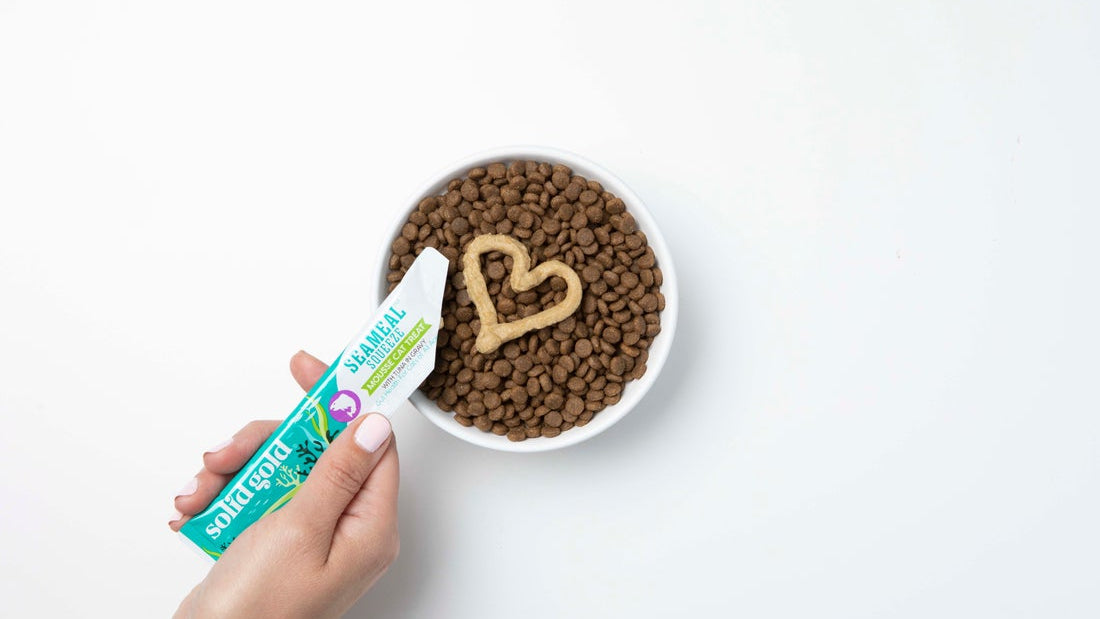
When transitioning between formats, measure each portion rather than estimating, and keep the old-to-new ratio consistent at every meal. A topper can also help bridge the gap. Our Bone Broth Tuna Meal Topper for Cats and Bone Broth Salmon Meal Topper for Cats are both made with real chicken bone broth as the first ingredient, along with real tuna or salmon shreds, and include naturally occurring collagen protein to help support gut health and hydration.
Mixed into a new dry recipe, either topper’s broth base and savory flavor can make an unfamiliar food more appealing to a picky eater, while the added moisture is a gentle option for cats with sensitive stomachs. Having both flavors on hand also gives you a fallback if your cat takes to one shred variety more than the other.
Introducing several new things at once, a new food, a new bowl, a new feeding time, makes it harder to tell what is actually working for your cat.
Serve meals in the usual spot, on the usual schedule, and mix the new food evenly into the old rather than placing it in a separate pile that is easy to ignore. This is especially useful for a picky eater, since it can be tempting to offer something different every time your cat hesitates. Frequent substitutions make the transition harder to evaluate and can reinforce the very pickiness you are trying to work around.
If your cat suddenly becomes a picky eater after previously eating well, or begins refusing several meals in a row, treat that as a reason to contact your veterinarian rather than a preference to wait out.
Learning how to transition cat food comes down to patience, measurement, and paying attention. Introduce the new recipe gradually, keep the rest of the routine consistent, and give your cat more time if they need it, while watching more closely than you might for other pets for any sign they have stopped eating altogether.
When you are ready to compare recipes, explore Solid Gold cat food by format, life stage, and nutritional need. If you are managing a multi-pet household, our guide to transitioning dog food covers the same process for the other side of the bowl.
Follow the feeding directions on the new food, and ask your veterinarian whether your cat needs an adjusted transition schedule.