Your cart is empty!
Let's fix that.
 FREE Shipping on all orders above $65!


Popular cat breeds carry stories that reach far beyond their appearance. Sometimes that story can be traced to the forests of Maine, the temples and manuscripts of Thailand, or a chance genetic mutation in Canada. In other cases, the history is less certain, a blend of documented breeding, regional folklore, and the qualities people came to admire over generations.
Exploring cat breed origins means separating what is documented from what has been passed down as folklore.
This guide explores eight popular and widely recognized types of cat breeds, from the gentle Maine Coon to the energetic Bengal. These different cat breeds have distinct histories, appearances, and commonly associated traits. Several of these popular cat breeds appear in recent Cat Fanciers’ Association popularity rankings, while others have become enduring favorites around the world.
Common cat breed traits can offer helpful context, but they are never a complete personality forecast. Cats are individuals, and their behavior is also shaped by early experiences, environment, health, and the relationships they build with people. Think of these profiles as introductions rather than guarantees.

These cat breed characteristics reflect broad tendencies, not rules. Individual cats may have different energy levels, grooming needs, and personalities.
The Maine Coon is a natural American breed closely associated with the state of Maine in North America. Its exact ancestry remains uncertain, despite colorful stories involving ship cats and longhaired companions brought to the United States from overseas. What is clear is that the breed developed a sturdy build and weather-ready coat suited to life in a cold climate.
Maine Coons are known for their large, muscular frames, tufted ears and feet, square muzzles, and long, flowing tails. Their coats often look wild but are typically smooth and shaggy rather than uniformly fluffy.
Maine Coon traits: Sociable, intelligent, loyal, and moderately independent.
Fun fact: Many Maine Coons communicate with chirps and trills in addition to traditional meows. Some are also notably interested in water.
The Siamese originated in Thailand, once known as Siam, and has one of the most recognizable silhouettes in the cat world. The modern breed is known for its long, refined lines, large ears, almond-shaped blue eyes, and contrasting color points on the face, ears, paws, and tail.
The Siamese cat personality is often described as highly intelligent and deeply people-oriented. These cats tend to make their opinions known, whether they are requesting dinner, conversation, or a warmer place to sit. Their social nature can make companionship and interactive play important parts of the day.
Siamese traits: Affectionate, vocal, curious, and closely engaged with the household.
Fun fact: The Siamese is not only known for its striking blue eye color. Its voice and enthusiasm for conversation are equally famous among cat families.
The Persian is one of the oldest established longhaired breeds. Its exact origin is not fully documented, though the breed has long been associated with Persia, now modern-day Iran. Over time, selective breeding shaped the rounded features, compact body, and abundant coat seen today.
Persian cats are generally known for a calm, gentle presence. Many prefer comfortable ground-level spaces to ambitious climbing routes. Their long coat requires consistent grooming, making coat care an important part of life with this breed.
Persian cat traits: Mellow, affectionate, quiet, and easygoing.
Fun fact: A Persian’s coat is more than a defining visual feature; it also makes regular combing part of the relationship between cat and caregiver.
The Ragdoll is a comparatively modern breed, developed in California during the 1960s through a breeding program associated with Ann Baker. Ragdolls are large, heavily boned cats with blue eyes, pointed coloring, silky semi-long coats, and plumed tails.
Their reputation centers on a gentle, laid-back temperament. Many Ragdolls enjoy staying close to their people and can adapt well to families with children or other pets. As with any breed, individual comfort with handling and social activity will vary.
Ragdoll personality: Calm, affectionate, sociable, and moderately playful.
Fun fact: Despite their substantial size and elegant coats, Ragdolls are often described as quiet companions rather than demanding household supervisors.
The Bengal was developed primarily in the United States using domestic cats and the Asian leopard cat. An early cross was made in 1963, while the modern breed took shape during the 1980s. The result is a domestic cat with an athletic build and a coat that may be spotted, rosetted, or marbled.
Bengal cats are often energetic, confident, and curious. Many enjoy climbing, learning games, exploring water, and solving problems that stand between them and whatever has caught their attention. A home with vertical space and regular interactive play may suit their active style.
Bengal cat traits: Intelligent, athletic, bold, trainable, and people-oriented.
Fun fact: The Bengal is the only domestic cat breed recognized for leopard-like rosettes, giving some coats a distinctly wild appearance.
The modern Sphynx developed from spontaneous hairless mutations in Canada and the United States. One foundational hairless kitten was born in Ontario in 1966, with later natural mutations contributing to the breed’s development.
Although Sphynx cats appear hairless, many have a fine layer of down that can feel like warm suede. Their prominent ears, expressive faces, wrinkled skin, and muscular bodies create an unmistakable look. Because a full coat does not absorb natural skin oils, regular skin care is part of responsible ownership.
Sphynx traits: Affectionate, lively, inquisitive, social, and attention-seeking.
Sphynx cat facts: The Sphynx is not always completely bare. Fine down may cover the body even when it is difficult to see from a distance.
The British Shorthair developed in the United Kingdom from longstanding populations of sturdy domestic cats. Its history is often connected to cats brought to Britain during the Roman era, although the details are partly historical tradition rather than a complete breeding record.
Among shorthair cats, the British Shorthair is especially recognizable for its compact, powerful body, round face, full cheeks, and exceptionally dense coat. Blue-gray may be its most familiar color, but British Shorthairs come in a much broader range of colors and patterns.
British Shorthair personality: Easygoing, loyal, quiet, and comfortably independent.
Fun fact: Many British Shorthairs prefer sitting beside their people rather than directly on them, a fitting expression of affectionate independence.
The Norwegian Forest Cat is a natural Scandinavian breed shaped by Norway’s cold, wet climate. Its history is intertwined with regional folklore and stories of cats aboard Viking ships, though not every detail can be confirmed as historical fact.
Its water-resistant semi-long outer coat, dense undercoat, tufted ears, large frame, and strong climbing ability reflect its northern roots. Norwegian Forest Cats are often gentle and family-oriented while retaining an independent streak.
Norwegian Forest Cat traits: Intelligent, adaptable, playful, loyal, and fond of climbing.
Fun fact: Their sturdy claws and powerful bodies can make them skilled climbers. A tall, stable cat tree may be appreciated more than the finest floor-level cushion.
Descriptions of cat breed personalities can help explain why one cat may seek constant conversation while another prefers a quiet observation post. They can also highlight practical considerations such as grooming needs, activity level, environmental enrichment, and sensitivity to changes in routine.
However, breed should not override the cat in front of you. A reserved Siamese, adventurous Persian, or lap-loving British Shorthair is not doing anything incorrectly. A mixed-breed house cat may also share many of the physical features and personality traits associated with pedigreed breeds.
The most useful approach is to combine breed knowledge with daily observation. Pay attention to appetite, body condition, activity, coat quality, litter box patterns, and social behavior. Those details offer a fuller picture than ancestry alone.
What are the most popular cat breeds?
Popularity changes by registry and year. Maine Coons, Ragdolls, Persians, British Shorthairs, and Sphynx cats regularly appear in recent Cat Fanciers’ Association rankings.
Which cat breeds are best for families?
Maine Coons and Ragdolls are often described as sociable, but no breed is a guaranteed match. Consider the individual cat’s temperament, social history, and comfort with the household.
Which cat breeds need the most grooming?
Persian cats generally need extensive coat care. Maine Coons, Ragdolls, and Norwegian Forest Cats also benefit from regular grooming, while Sphynx cats require routine skin care.
Are cat breed personalities reliable?
They are useful as broad tendencies, not promises. Early experiences, environment, health, and individual preference all help shape personality.
What is the best cat breed for apartment living?
The best fit depends on energy, enrichment, noise, and social needs, and not size alone. Even an active breed may adapt well when its physical and mental needs are met.
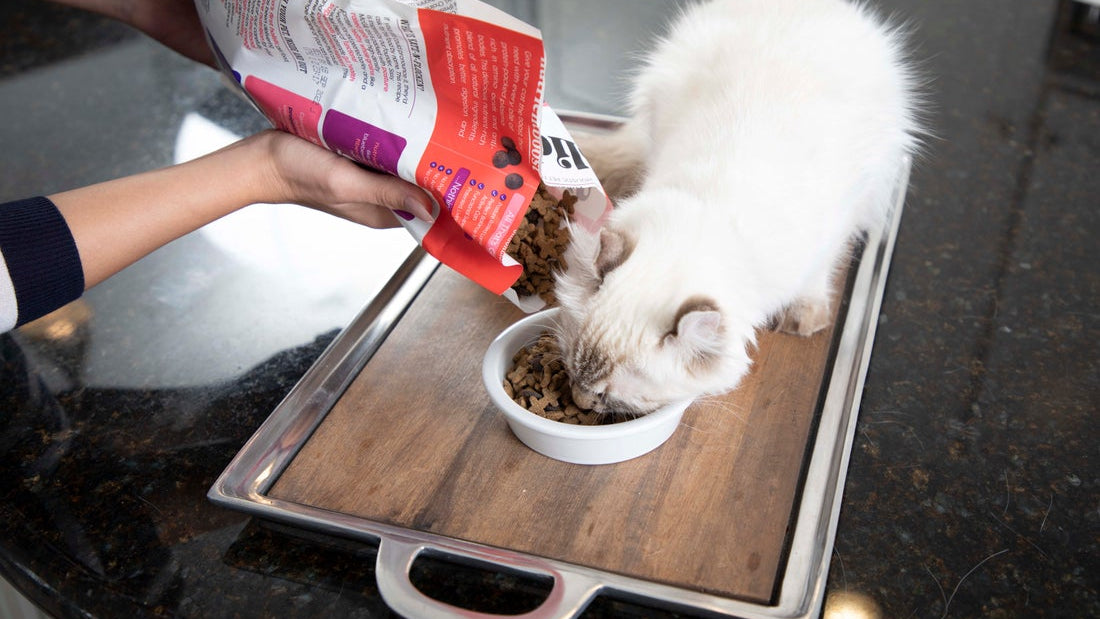
A cat’s breed may influence size, coat type, or typical activity, but it should not determine the menu. Before choosing food, consider:
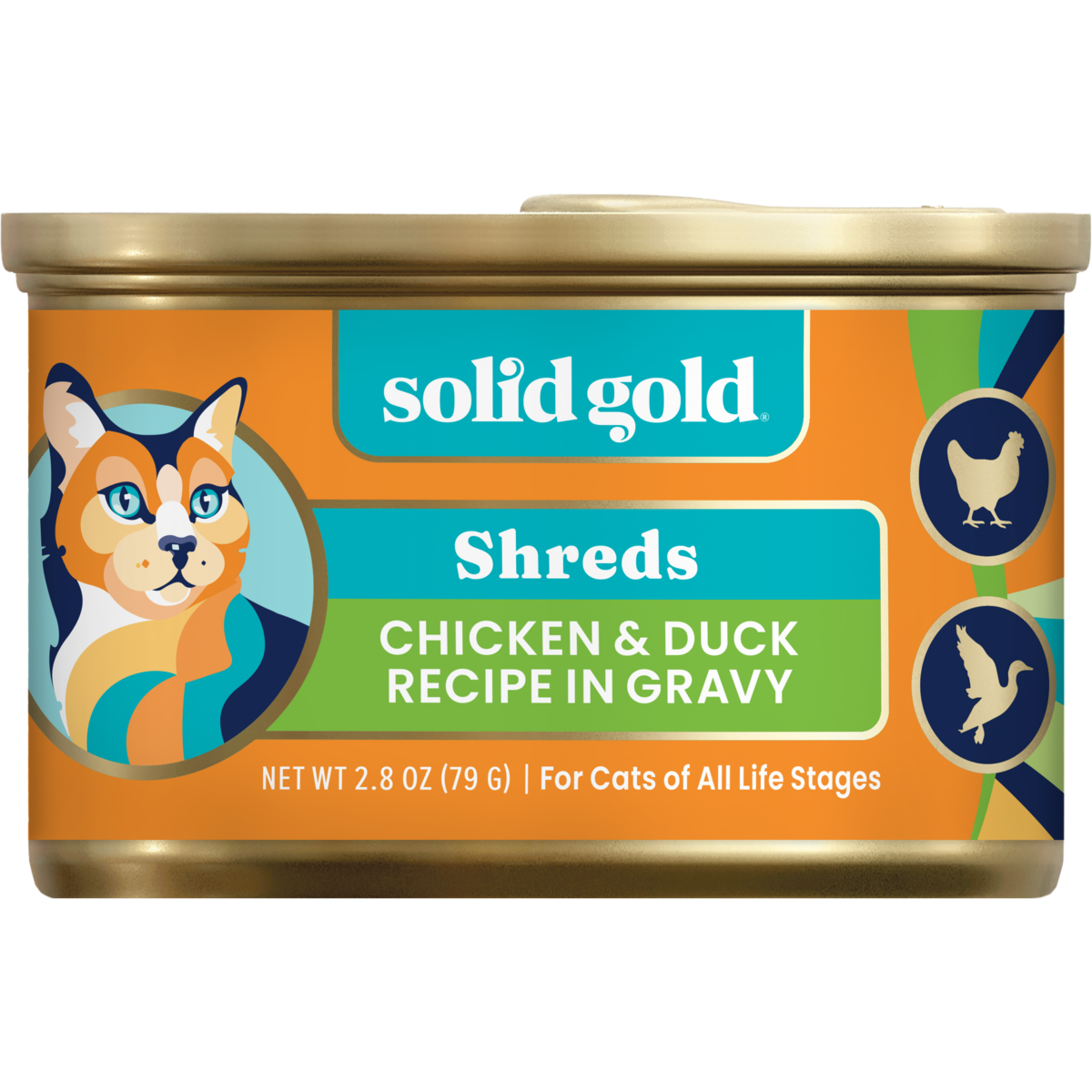
Whether your cat is a picky eater or simply particular about texture, breed alone does not predict what they will enjoy. Our Nature’s Harmony wet cat food offers chicken-based shreds in savory gravy, with recipes suitable for kittens, adults, and senior cats. The tender texture may offer an appealing option at mealtime, but the best choice still depends on the individual cat, not their breed profile.
Whenever you introduce a new food, follow the feeding guidance and transition gradually. A thoughtful food choice should support the individual cat you know, rather than a checklist of assumptions about their breed.
Cat breed facts offer a fascinating window into geography, human companionship, and the qualities people have valued across generations. Yet the most meaningful history is often the one unfolding at home: the favorite sleeping place, the familiar mealtime ritual, and the small routines shared between a cat and their family.
Learning about some of the most popular cat breeds can deepen appreciation without placing limits on personality. Whether your cat comes with a pedigree, an adoption record, or a mysterious family tree, they remain entirely themselves, and that may be the most interesting fact of all.