
Your cart is empty!
Let's fix that.
 FREE Shipping on all orders above $65!


Dogs need protein, but does that mean food with the highest percentage on the bag is always the right choice? Not necessarily. The protein source, whether the recipe is grain-free, your dog's activity level, and the overall balance of the formula all matter when choosing high-protein dog food. Understanding these details can make it easier to compare recipes, rather than shopping by a single number on the label.
Protein provides the amino acids that help support normal muscle maintenance, tissue repair, and everyday energy, which matters more for some dogs than others depending on how active they are. A working dog, an agility competitor, or a dog that treats every walk like an event generally has different protein needs than a dog with a more relaxed daily routine.
Protein is only one part of complete and balanced nutrition, though. A suitable recipe also needs to provide the right fats, vitamins, minerals, and calories for your dog's size, life stage, and activity level. Puppies, active adults, and senior dogs all have different needs, so rather than choosing food based on one number, it helps to consider how the entire formula fits your dog, and how well your dog actually takes to it. A recipe that looks perfect on paper doesn't mean much if it sits untouched in the bowl, which is worth keeping in mind if you're feeding a picky eater.
The term "high protein" can vary quite a bit between brands, so it's worth reviewing the guaranteed analysis and full nutritional profile when comparing dog food, not just the marketing on the front of the bag.
When comparing labels, consider:
Guaranteed analysis: This lists the food's minimum crude protein percentage.
Protein sources: Look at where the protein actually comes from, not just the percentage. A named animal protein like beef, duck, or chicken as the first ingredient is a stronger signal than a percentage alone.
Grain-free status: Many high-protein recipes are also grain-free. This isn't automatically better or worse for every dog, and it's worth discussing with your veterinarian, particularly given ongoing research into diet and canine heart health. If you have any concerns, your vet can help you weigh the options for your specific dog.
Calories and fat: Two formulas with similar protein levels can still have very different calorie and fat content.
Life stage and size: Confirm the recipe is appropriate for your puppy, adult dog, or senior dog, and for their size, since a toy breed and a large working dog don't need the same formula.
When choosing high-protein dog food, it helps to review the full ingredient and nutritional profile instead of focusing on crude protein alone.
A well-balanced formula may include:
One current example is Solid Gold's Nutrientboost™ Barking at the Moon™ Beef, a grain-free dry dog food built around real beef as the first ingredient, with a minimum of 34% crude protein and a minimum of 17% crude fat. It's formulated with functional superfoods, omega fatty acids from salmon oil, 90 million probiotics per pound, and added taurine.
For toy and small-breed dogs, Solid Gold's Mighty Mini line offers a similar meat-forward approach in a smaller kibble size, with Mighty Mini™ Beef, Sweet Potato & Apple (a minimum of 30% crude protein) and Nutrientboost™ Mighty Mini™ Chicken, Chickpea & Pumpkin (a minimum of 32% crude protein and a minimum of 17% crude fat), both leading with a named animal protein.
As with any recipe, review calories, feeding directions, and life-stage suitability before choosing one, and don't assume a higher percentage automatically means a better fit for your dog. If you do decide to switch your dog to a new high-protein recipe, a gradual transition matters just as much as the recipe itself. Our guide on how to transition dog food walks through a full 7-to-10-day schedule, including tips for dogs who take longer to come around to something new.
Not every dog food that claims "high protein" earns the label the same way. Some brands lean on plant proteins, like pea protein or soy, or lower-quality meat meals just to hit a number on the guaranteed analysis. Solid Gold's approach has stayed meat-first for more than 50 years, built around real, named animal proteins rather than fillers standing in for them.
Every Barking at the Moon and Mighty Mini™ recipe is balanced with functional superfoods, including pumpkin, carrots, blueberries, and cranberries, alongside omega fatty acids from salmon oil and 90 million probiotics per pound to support digestion. It's the same holistic, gut-first philosophy Solid Gold has built its reputation since 1974: protein that fuels your dog, backed by a full nutritional profile rather than a single headline number on the bag.
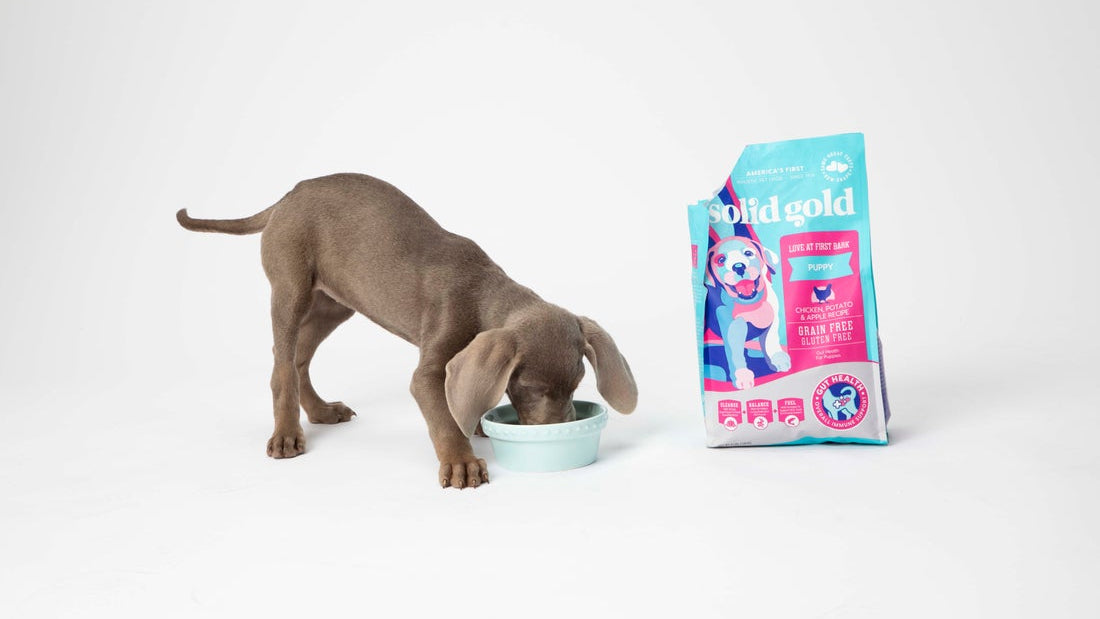
For puppies who need protein-rich nutrition earlier in life, our NutrientBoost™ Love at First Bark™ recipe adds proteins, amino acids, and antibodies from sustainably sourced plasma to support digestion and nutrient absorption during a stage when getting nutrition right matters most.
Not every dog needs the same protein level. A highly active adult dog, a working dog, or a dog in a demanding sport may do well on a higher-protein formula like Barking at the Moon™, with a minimum of 34% crude protein. A toy or small-breed dog with a more moderate activity level may be better suited to the Mighty Mini™ line instead, with Beef, Sweet Potato & Apple (a minimum of 30% crude protein) and Nutrientboost™ Chicken, Chickpea & Pumpkin (a minimum of 32% crude protein) recipes, both built around smaller kibble to match a smaller mouth.
If your picky eater needs an extra push at mealtime, a protein-forward topper can help close the gap without switching foods entirely. Our Protein Shred Meal Topper adds real shredded protein and broth on top of your dog's current recipe, a useful option for a picky eater or a dog who could use a little more protein without a full diet change. For more ideas on mixing in extra nutrition this way, our guide on dog food toppers walks through how to choose the right one.
A very high-protein, meat-forward recipe can also win over a picky eater on its own, since a stronger aroma and richer flavor profile tend to appeal to dogs who turn their nose up at blander formulas. That said, a picky eater's hesitation isn't always about protein level alone, so if pickiness continues after switching, it's worth a closer look at texture, freshness, or an underlying health reason rather than assuming more protein is always the fix.
Portion guidance matters here too. A protein-forward formula may have a different calorie or fat level than your dog's current food, so follow the feeding directions as a starting point, then adjust based on your dog's activity level and body condition.
Start with your dog rather than the latest nutrition trend. Consider their age, size, activity level, body condition, and any digestive needs or health history. If you're still comparing formulas, our Help Me Choose quiz can point you toward an option that fits your dog's daily routine.
A high-protein formula can appeal to pet parents looking for a meat-forward option, but it still needs to fit the individual dog, picky eater or not. Talk with your veterinarian before changing your dog's food if they have a diagnosed health condition, are on a prescribed diet, or if you have questions about whether a grain-free, high-protein recipe is the right fit.
Remember, the best high-protein dog food isn't simply the formula with the biggest number on the label. It's one built on real ingredients you can trust, backed by a brand with the nutritional philosophy to support it, and one that works consistently in your dog's daily feeding routine.