
Your cart is empty!
Let's fix that.
 FREE Shipping on all orders above $65!


Protein, fat, and fiber appear on every pet food label, but the numbers only help if you know what they measure. A higher number isn't automatically better, and a lower one isn't automatically worse. What matters is how the numbers fit your pet's life stage, size, activity level, and feeding routine.
This guide helps pet parents read the guaranteed analysis, understand what each nutrient does, see why wet and dry numbers can look so different, and put the information to work at mealtime.
The guaranteed analysis is the part of the label that lists nutrient levels. Pet food labels must include four values: a minimum for crude protein, a minimum for crude fat, a maximum for crude fiber, and a maximum for moisture.
The words minimum and maximum matter. A minimum means the food contains at least that much, and a maximum means it contains no more than that. The word crude refers to the laboratory method used to measure a nutrient, not to the quality of the ingredients.
Actual protein and fat levels may exceed the stated minimums, while crude fiber and moisture may be below their stated maximums. If you need precise numbers for a specific reason, you can ask the manufacturer for a typical nutrient analysis.
Protein provides the amino acids that help support normal muscle maintenance, tissue repair, and everyday energy. Needs vary with life stage and activity, so a working dog and a relaxed senior dog may have different energy and nutritional needs.
The percentage is only part of the picture. A named animal protein such as beef, chicken, or pollock near the top of the ingredient list helps identify where the protein comes from, though it doesn't by itself establish protein quality, digestibility, or the contribution of other ingredients. For example, our Nutrientboost™ Barking at the Moon™ Beef is built around real beef as the first ingredient, with a minimum of 34% crude protein.
Cats are obligate carnivores, and AAFCO sets a higher minimum protein level for adult cats than for adult dogs, so cat foods generally list higher protein. Our guide to high protein cat food covers what to look for.
Fat is a concentrated source of energy, helps the body absorb certain vitamins, and supplies essential fatty acids that support skin and coat health.
Fat is also the most calorie-dense nutrient, so a small difference in fat can mean a noticeable difference in calories. That's why the calories per serving matter alongside the percentage.
Some labels list both a minimum and a maximum for fat, which you often see on weight-management foods. Our Fit as a Fiddle™ with Alaskan Pollock dry cat food lists a minimum of 9% and a maximum of 12% crude fat. For dogs, see our guide to weight control dog food.
Fiber adds bulk and may help a pet feel satisfied on fewer calories, though more fiber isn't automatically better for every pet. Ingredients such as pumpkin, pea fiber, and dried chicory root are common fiber sources.
The label states the maximum crude fiber level, which does not represent all types of dietary fiber in the food. Fiber levels vary widely by recipe, and a food built for weight management will often list a higher maximum than one built for energy.
The guaranteed analysis is measured on an as-fed basis, which includes the water in the food. Wet food is mostly water, so its nutrients look lower than those in dry food even when the food is rich in protein.
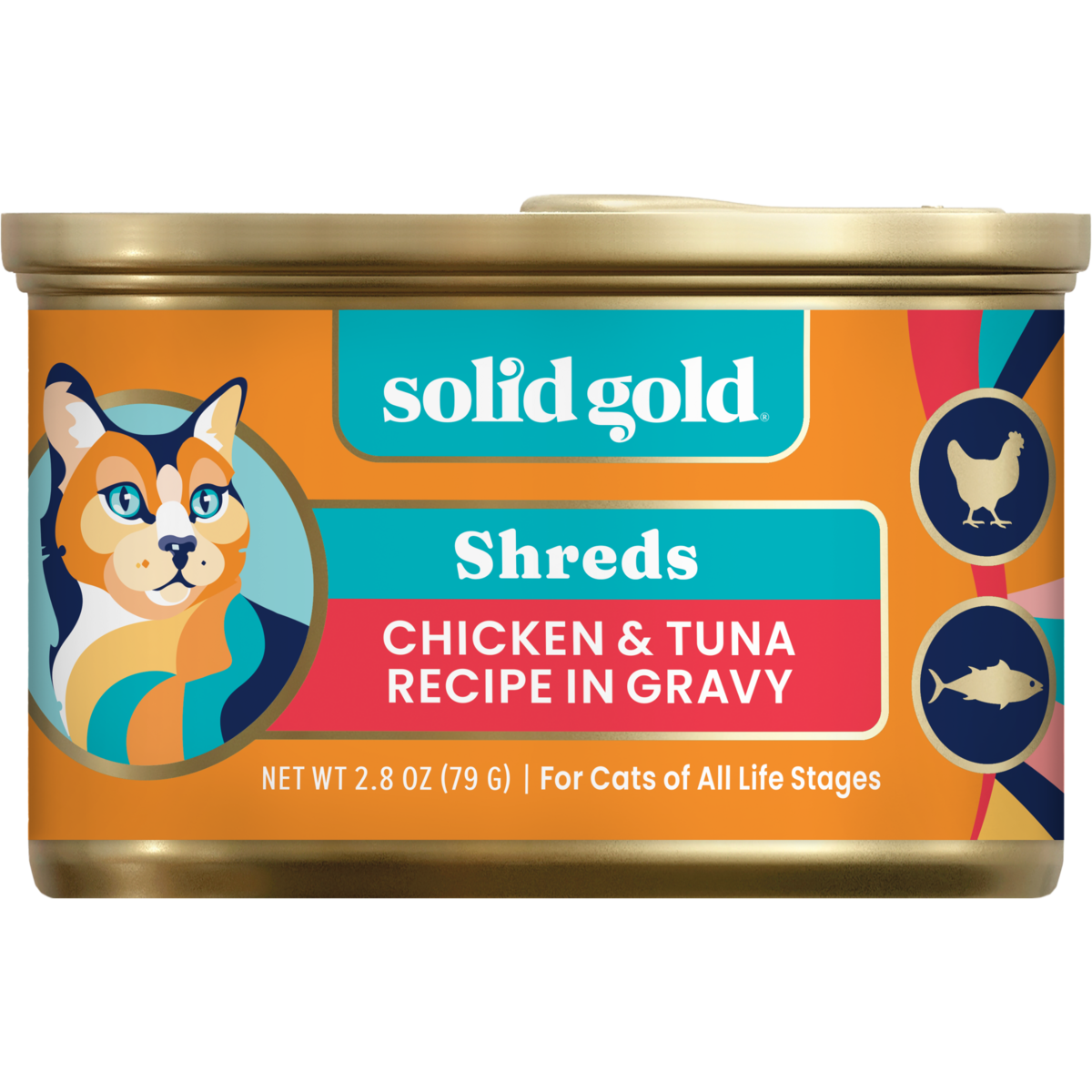
For example, our Chicken & Tuna Shreds Wet Food for Cats lists a minimum of 10% crude protein and a maximum of 84% moisture. That 10% sounds small next to a dry food, but the water explains most of the gap.
To compare them on equal footing, convert to a dry matter basis using this formula: dry matter nutrient percentage = nutrient percentage ÷ (100 minus moisture percentage) × 100.
Using a separate hypothetical example, a canned food listing 10% protein and 78% moisture has 22% dry matter, so its protein on a dry matter basis is about 45.5% (10 ÷ 22 × 100). A dry food listing 28% protein and 10% moisture has 90% dry matter, or about 31.1% (28 ÷ 90 × 100). Because label values are minimums and maximums, calculations that use them are estimates. Our guide to wet vs. dry cat food covers more on the differences.
These values come from our guaranteed analyses. They show how formulas differ by purpose, not which is better.
These are as-fed label values, not a direct comparison of nutrient concentration across wet and dry foods.
|
Food |
Crude Protein |
Crude Fat |
Crude Fiber |
|
Nutrientboost™ Mighty Mini™ Chicken, Chickpea & Pumpkin (dry dog food) |
32% minimum |
17% minimum |
4% maximum |
|
Fit as a Fiddle™ with Alaskan Pollock (dry cat food) |
31% minimum |
9% minimum, 12% maximum |
9% maximum |
|
Chicken & Tuna Shreds Wet Food for Cats (wet cat food) |
10% minimum |
1.5% minimum |
1% maximum |
A small-breed dog formula, a weight-management cat food, and a wet cat food serve different needs, so the numbers differ for good reasons. These percentages alone cannot tell you whether a food is complete and balanced or appropriate for your individual pet.
The numbers are a starting point. These steps help turn them into a feeding routine:
Match the life stage: Check the nutritional adequacy statement to confirm the food is appropriate for your pet's life stage. For senior pets, discuss individual nutritional needs with your veterinarian.
Check calories, not just percentages: Check calories per cup, can, or pouch, depending on the food format. Follow the feeding directions as a starting point, then adjust based on your pet's activity level and body condition.
Transition gradually: Switching foods too quickly can upset digestion. Our guides on how to transition dog food and how to transition cat food walk through a gradual schedule.
Treat picky eating as a feeding question: A recipe only works if your pet eats it consistently. Texture, aroma, and routine often matter more than a single percentage.
If you're feeding a picky eater, introduce changes one at a time and keep mealtimes consistent. Adding a little wet food, or switching texture, can help without changing the whole diet, and a pet who is eating well on a suitable recipe doesn't need a higher protein number to be well fed.
Talk with your veterinarian before changing your pet's food if they:
Some medical conditions call for specific protein or fat levels, and those decisions belong with your veterinarian.
The right protein, fat, and fiber levels are the ones that suit your pet's life stage, size, and activity, and that they'll eat consistently. If you're still comparing recipes, our Help Me Choose quiz can point you toward an option that fits your pet's daily routine.