Your cart is empty!
Let's fix that.
 FREE Shipping on all orders above $65!


Cats need protein, but does that mean food with the highest percentage is always the best option? Not necessarily. The protein source, moisture level, calorie content, life stage, and overall balance of the recipe all matter when choosing food for your cat. Understanding these details can make it easier to compare dry cat food, wet cat food, or a combination of both.
Cats are obligate carnivores with specific nutritional requirements, including nutrients commonly supplied by animal-based ingredients. Protein provides amino acids that help support normal muscle maintenance, tissue function, and other essential processes.
Cats also require taurine, so look for cat food with taurine as part of a complete and balanced formula. However, protein is only one part of complete and balanced cat nutrition. A suitable recipe should also provide the appropriate fats, vitamins, minerals, and calories for your cat’s life stage.
Kittens, active adult cats, and senior cats may have different nutritional and calorie needs. Rather than choosing food based on one number, consider how the entire formula fits your cat.
The term “high protein” can vary among brands and recipes, so review the guaranteed analysis and complete nutritional profile when comparing foods.
When comparing cat food labels, consider:
Guaranteed analysis: This lists the food’s minimum crude protein.
Moisture content: Wet and dry foods contain very different amounts of water, so you cannot always compare their listed protein percentages directly.
Protein sources: Look at where the protein comes from, not only the percentage.
Calories and fat: Two formulas with similar protein levels may have different calories and fat content.
Life stage: Confirm that the recipe is appropriate for your kitten, adult cat, or senior cat.
If you want to see how these details appear across actual formulas, Solid Gold’s High-Protein Cat Food collection provides a useful starting point for comparison.
When choosing high-protein cat food, review the full ingredient and nutritional profile instead of focusing only on crude protein.
A well-balanced formula may include:
Taurine and other essential amino acids
Complete vitamins and minerals
Omega fatty acids to support normal skin and coat health
Fiber or digestive-support ingredients
Clear calorie and feeding information
A complete-and-balanced nutritional statement
Guidance for the appropriate life stage
One current example of high-protein dry cat food is Indigo Moon Chicken Dry Food for Cats, a grain-free cat food formula with chicken, and egg. It also includes taurine, salmon oil, and probiotics. Its guaranteed analysis lists a minimum of 42% crude protein, but customers should still review calories, feeding directions, and life-stage suitability before choosing it.
Portion guidance matters, too. A protein-forward formula may have a different calorie or fat level than your cat’s current food. Follow the feeding directions as a starting point, then consider your cat’s activity level and body condition when determining portions.
Both dry cat food and wet cat food can provide protein, but moisture affects the percentages shown on their labels. The right choice often comes down to your cat’s preferences and feeding needs.
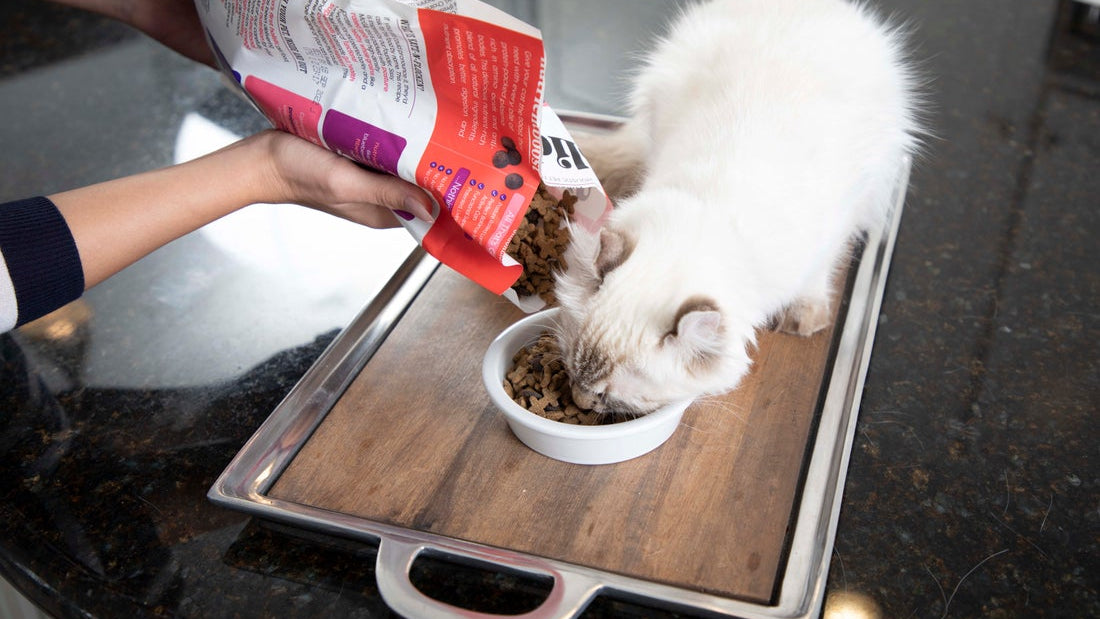
Dry cat food offers convenient storage, simple portion measurement, and a crunchy texture that some cats prefer. Wet cat food provides more moisture, a softer texture, and an aroma that may appeal to cats who need extra encouragement at mealtimes.
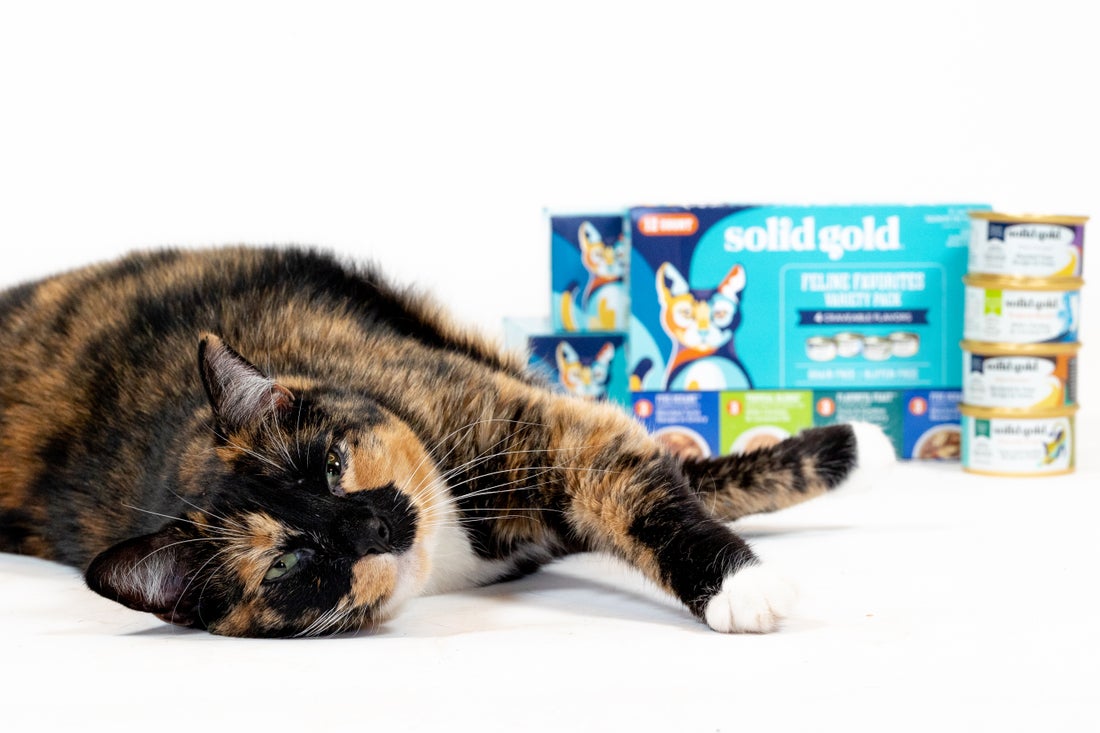
Cats who are still discovering their preferred texture may benefit from trying a variety of pâtés and shredded wet-food formats. Solid Gold’s Feline Favorites Variety Pack provides several recipes in one assortment.
Some pet parents use both formats as part of a mixed-feeding approach. If you serve wet and dry food together, measure both portions carefully so your cat receives an appropriate number of daily calories. Introduce dietary changes gradually and keep fresh water available, regardless of the food format.
Start with your cat rather than the latest nutrition trend. Consider their age, activity level, body condition, preferred texture, digestive needs, and health history. If you are still comparing formulas, Help Me Choose can point you toward an option that fits your cat’s daily feeding routine.
A high-protein formula may appeal to pet parents looking for a meat-forward option, but it still needs to fit the individual cat. Talk with your veterinarian before changing your cat’s food if they have a diagnosed health condition or specific dietary needs.
Remember, the best high-protein cat food is not simply the formula with the biggest number on the label. It is one that provides complete and balanced nutrition, suits your cat’s life stage, and works consistently in their daily feeding routine!