
Your cart is empty!
Let's fix that.
 FREE Shipping on all orders above $65!


The holidays change your schedule. Your pet's feeding routine doesn't need a holiday makeover. Guests arrive at dinnertime, an overnight trip disrupts the morning routine, and several family members each offer "just one treat."
Holiday meals take planning. Your pet's meals can stay simple. Keep their familiar food on hand, agree on who handles feeding, and set aside the day's treats before guests arrive.
Your pet's usual food, in measured portions, at a rhythm they recognize, is the simplest holiday feeding plan. A steady routine also makes it easier to identify what has changed if your pet's appetite or digestion shifts. A holiday isn't a reason to change recipes, and a busy week isn't the time to introduce a new one. This matters even more if your pet can be a little picky about what's in the bowl.
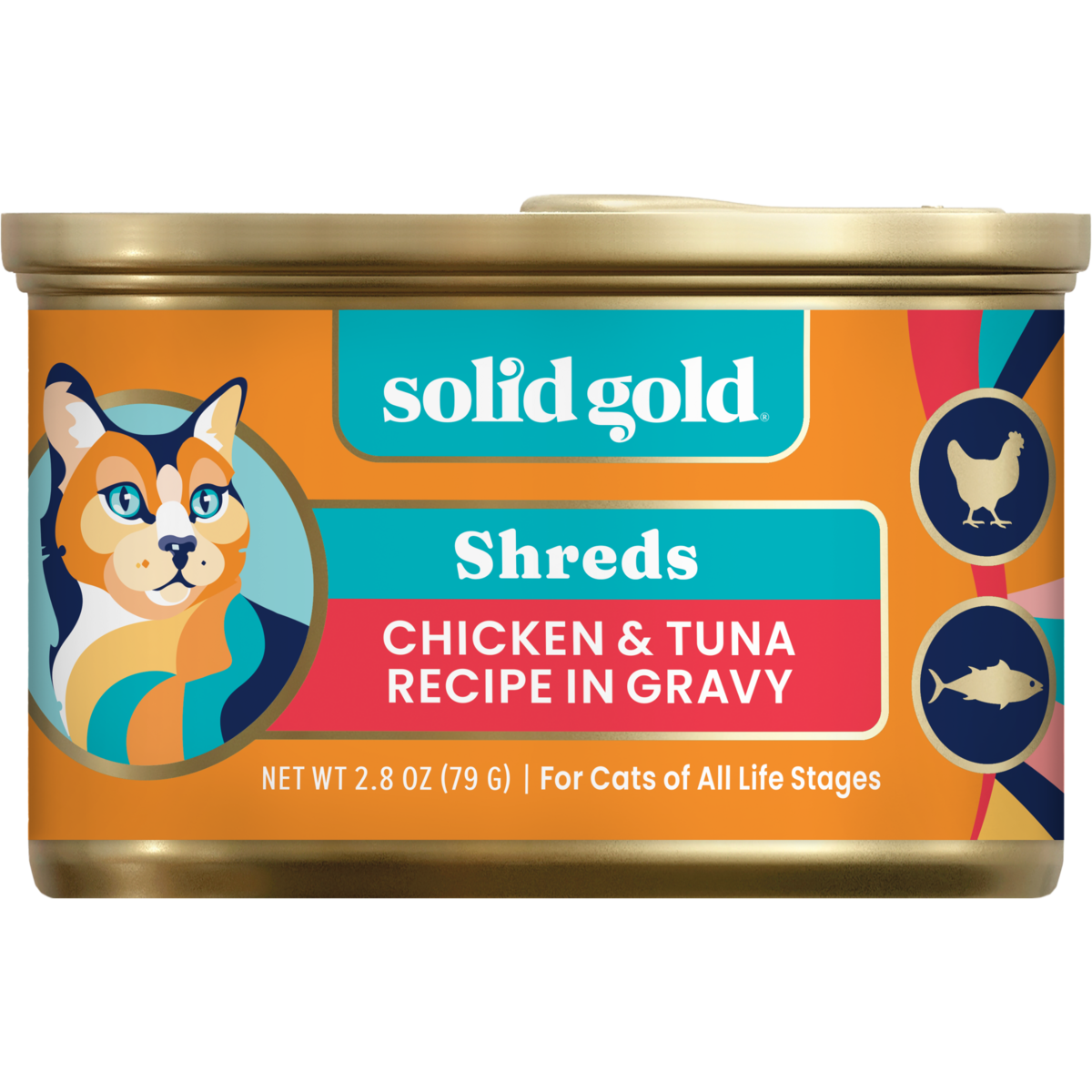
If your pet is already eating Solid Gold's Fit and Fabulous™ Alaskan Pollock Dry Food for Adult Dogs recipe or Chicken & Tuna Shreds Wet Food for Cats, the holidays are a good time to keep it steady.
Check your supply before the week gets busy, so you don't run short mid-trip or on a day when stores are closed. If you do need to change foods for a real reason, make the change gradually. Our guides on how to transition dog food and how to transition cat food walk through a schedule.
Early departures, late dinners, and long outings all move mealtimes. Pet parents can aim for flexibility instead of the exact minute, and plan ahead so meals don't get missed. If your pet follows a veterinarian-directed feeding or medication schedule, ask how to handle any timing changes.
In a full house, duplicate dinners happen. One person feeds the pet, and another does the same an hour later, which adds a second full meal no one planned. Before plans get busy, choose one designated feeder, or post a simple checklist with "breakfast served" and "dinner served" boxes. When someone else is feeding, leave a short note that lists each meal, the portion, and the time, so nothing depends on memory.
If you have more than one pet, tell the feeder which food belongs to which pet, and keep bowls separate during gatherings so no pet eats another's food. Tell guests the plan before they ask. A friendly line works well: "We've got their meals covered. Please check with us before offering treats."
Everyone wants to include the pet, and each small extra seems harmless on its own. Treats, edible chews, and toppers all contribute to calories, so count them in your pet's daily total, even when different people offer them. The American Animal Hospital Association's feeding guidance says treats and other foods that aren't complete and balanced should make up no more than 10% of daily calories.
Decide which extras are planned for the day, portion them out ahead, and let guests hand those over instead of improvising. Some toppers are complete and balanced and can replace part of a meal, while others are meant to be served with a complete and balanced food, so check the label. Our guide to dog food toppers explains how toppers add to the daily total, and our guide to weight control dog food covers portions and body condition.
Keep extras modest so they don't displace your pet's regular meals.
Keep table food off the list. Many holiday foods are unsafe for pets, including grapes and raisins, chocolate, onions, garlic, and xylitol. Fatty foods such as turkey skin and gravy can upset a pet's stomach and, in some pets, lead to more serious problems. ASPCA's list of people foods to avoid feeding your pets covers the details. If your pet eats a potentially toxic food, contact your veterinarian or an animal poison-control service right away. Don't wait for symptoms.
The person feeding your pet shouldn't have to guess. A written plan travels better than a quick verbal handoff, whether the caregiver is a sitter, a relative, or boarding staff, and it keeps portions and timing consistent when someone new is in charge. A short checklist covers the essentials:
Familiar food: Pack enough for the whole trip, plus a few extra days in case plans change. If your pet is particular about food, bring their own supply rather than counting on a substitute.
Portion and timing instructions: List the amount and the usual feeding times.
Bowls and a measuring cup: The same tools help keep portions consistent.
Veterinarian directions: Include any feeding directions your veterinarian has given for your pet.
Contact information: Leave your number and your veterinarian's.
A new place can change a pet's appetite. If your pet refuses food or eats noticeably less than usual, contact your veterinarian for advice rather than assuming it's holiday pickiness.
After the celebration, go back to your pet's usual meals and measured portions. Resist the urge to make up for holiday extras with a skipped meal or a sudden diet change, since abrupt changes can upset digestion. If you used a different bowl, feeding spot, or schedule while away, return to your usual setup too.
If appetite or digestive changes persist, contact your veterinarian.
The holiday schedule may change, but familiar meals can remain one dependable part of your pet's day.